
Canadian Military Biathlon Team Competes in 1957 World Championships
In 1956, Second Lieutenant Garry Hunt, 22 years old, of the Princess Patricia’s Canadian Light Infantry Regiment (PPCLI), was stationed in West Germany, as part of a 6,000 strong Canadian force which worked under the British forces, numbering between 75,000 and 80,000. The British had a very competitive sports programme, including the British Army Ski Championships, held annually in West Germany. After participating in summer sports including soccer and track and field, it was decided that the Canadians would enter teams in the ski championships in February 1957 and also the annual World Championships held in early March. This would be the first time any Canadian military team had competed in either of these championships.
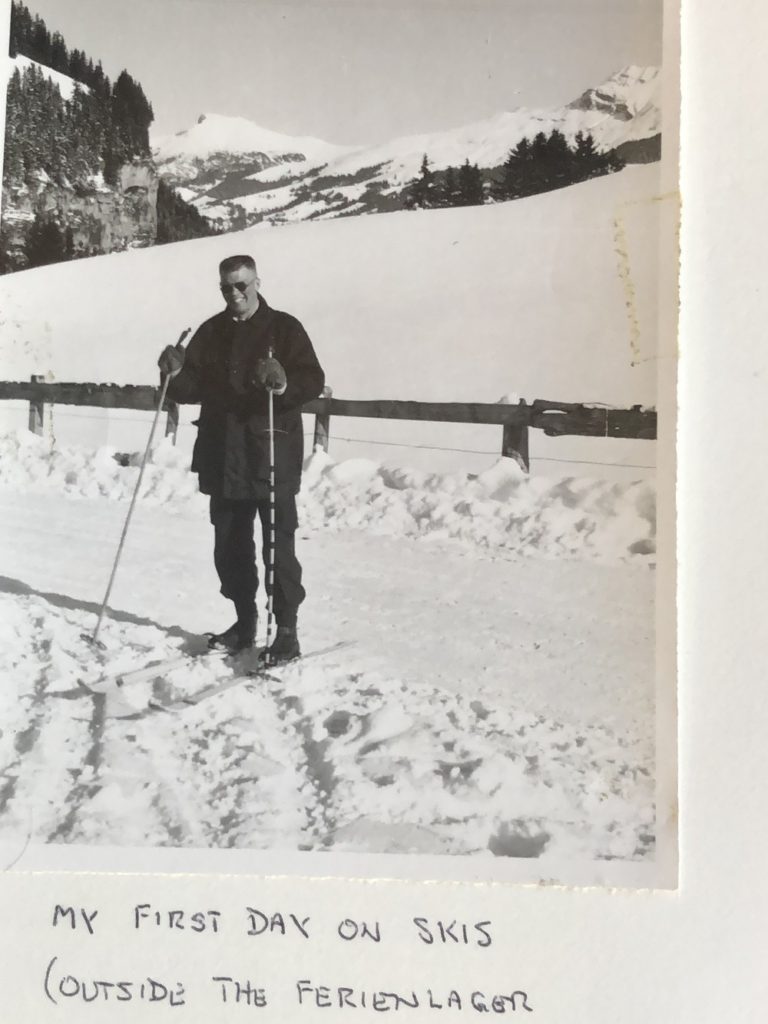
There were a few men in the PPCLI who already knew how to ski, either alpine or cross country, but Championship rules required all teams to consist of an officer, a non-commissioned officer and two privates, so immediately after returning from his Christmas leave in early January 1957, Garry was told he would join the team. Upon learning that this would entail a month away from regular duties while training in the Swiss Alps, he enthusiastically signed up. The men who would be competing in the cross country and biathlon events trained at a Swiss tourist centre located at about 4,600 m. elevation. Training took place daily for about 5 hours on military-issue skis known as “bangy boards”. These skis were designed to be unbreakable and were used by most armies which included ski patrols as part of their work.
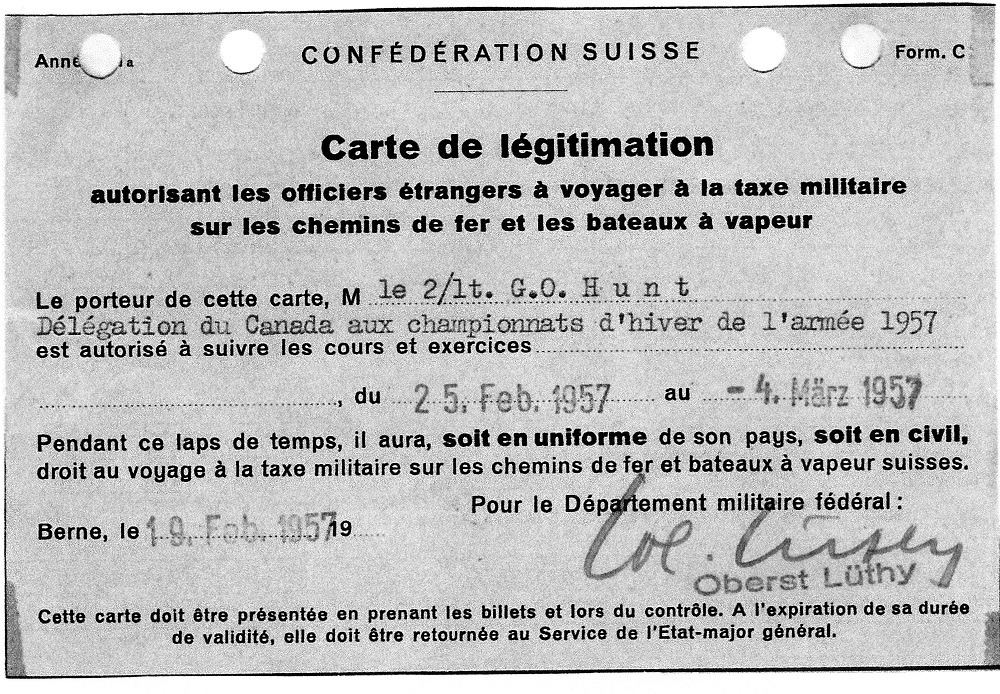
Over the four weeks, the men progressed from skiing on the flat to learning how to ski downhill and slalom. By the end of week three, wooden racing skis were purchased for the team’s final week of training and for the competitions. The men would be taken each day to different trails in the Hahnamoos Pass area and would work their way back down to their base. After training ended around 2 pm each day, they had the rest of the day off.
At the end of January they returned to their barracks in West Germany, where there was no snow, so their training consisted of running and shooting at the range. Fortunately for the team, although their skiing skills were not very good, they were all excellent shots as rifle training was a key part of military life in Germany at that time and all team members were classified as either “first class” or “master” shooters.
In mid-February the team journeyed to the Hartz mountains, along the border with East Germany, where the British Army Ski Championships were to take place. This was the best mountain area in the British zone with mountains that were not too high or steep, and thickly forested. There had been a fresh fall of snow just before they arrived, but unlike the dry Swiss alpine snow on which they had trained in January, the Hartz mountain snow was wet which the men were not used to so they had to adapt the wax they used to suit the conditions.
The overall Canadian team had 14 cross country skiers, and was divided into three regimental teams of four persons as specified above – the PPCLI, the Royal Canadian Regiment (RCR) and the Royal 22nd Regiment (R22eR). As well, there were two “spares”. At this time in military sport history, national service was still the norm in most European countries, which made it possible for armies to “recruit” top athletes who would spend their military service as full-time “amateur” athletes rather than as soldiers. National service had ended in Canada by that time, so it was much harder to find elite athletes among the ranks or the officers.
As well as individual biathlon and relay races, the Championships also included the Military Team Race as its crowning event. It was a biathlon race, with each person carrying his rifle attached to a military service backpack. Clothing consisted of winter underwear and a thin nylon winter camouflage suit, ski boots, a beret and, of course, the wooden racing skis and poles. The course included a slalom section, as well as regular cross country and the range shooting. Teams had to remain together throughout the event, so if one member lagged behind, the other three had to wait for him to catch up. There were checkpoints at the slalom section as well as at the range. The “targets” were balloons, so it was very obvious if a hit was scored. Garry’s team, the PPCLI, did not miss a single target, and thus avoided having to ski any penalty loops and came fourth overall out of 30 teams, and the first of the three Canadian teams.
Five days later, eight Canadians arrived in Andermatt, Switzerland, site of the 1957 World Championships. These eight men had been selected based on the results of the British Ski Championships where Canada came in fourth. For the World Championships Canada formed two teams, Canada1 and Canada 2. Garry captained Canada 1, with men from the RCR, the R22eR and another member of the PPCLI making up the rest of the team. The World Championships began with a parade, a salute and national anthems of each of the 12 countries competing. Seven of the teams were from NATO – Canada, West Germany, Britain, France, Italy, Norway and the USA; four teams were from countries that were neutral between the USSR and NATO – Austria, Finland, Sweden and Switzerland, and there was one Warsaw Pact country – Czechoslovakia. In total there were 21 teams competing, comprised of four men apiece.
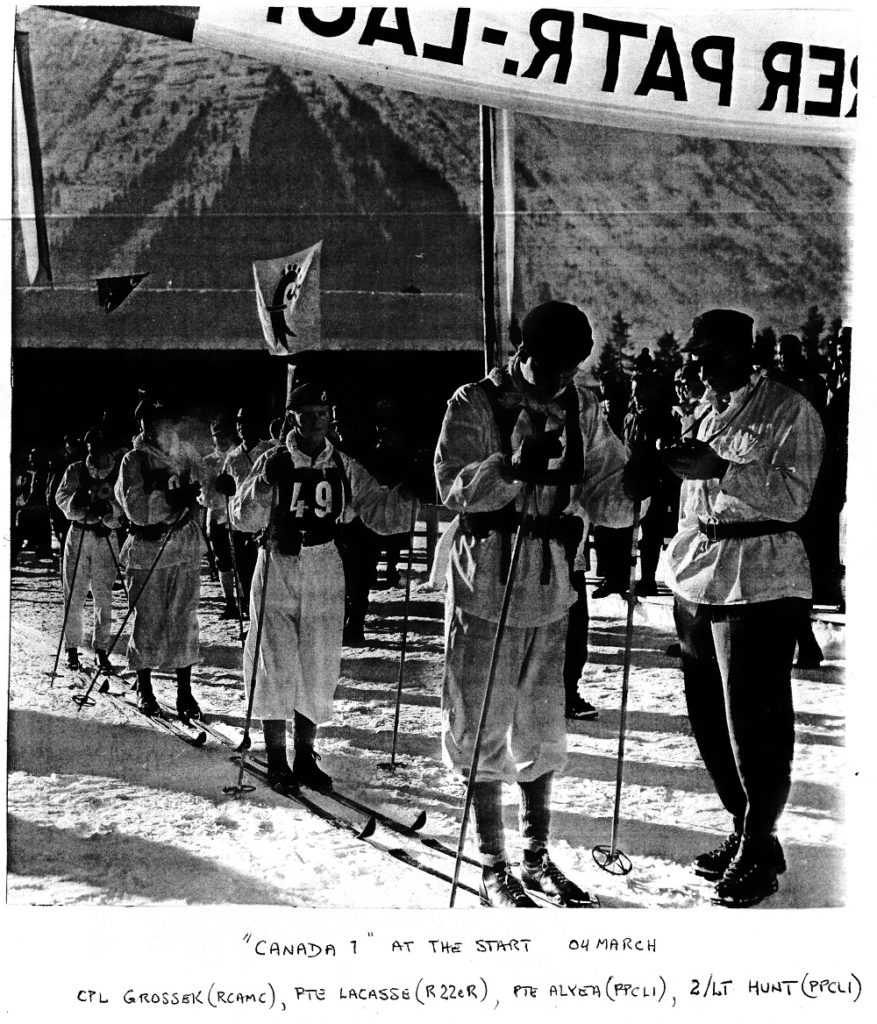
Shooting could be either standing or prone, but in the event, only Finland did standing shooting – all other teams used the prone position. The Canadian team’s rifles, which were Lee Enfields, were attached to the pack frame and the total weight carried was about 12 pounds. The course was 25.65 kilometres long and the elevation gain was 1,660 metres.
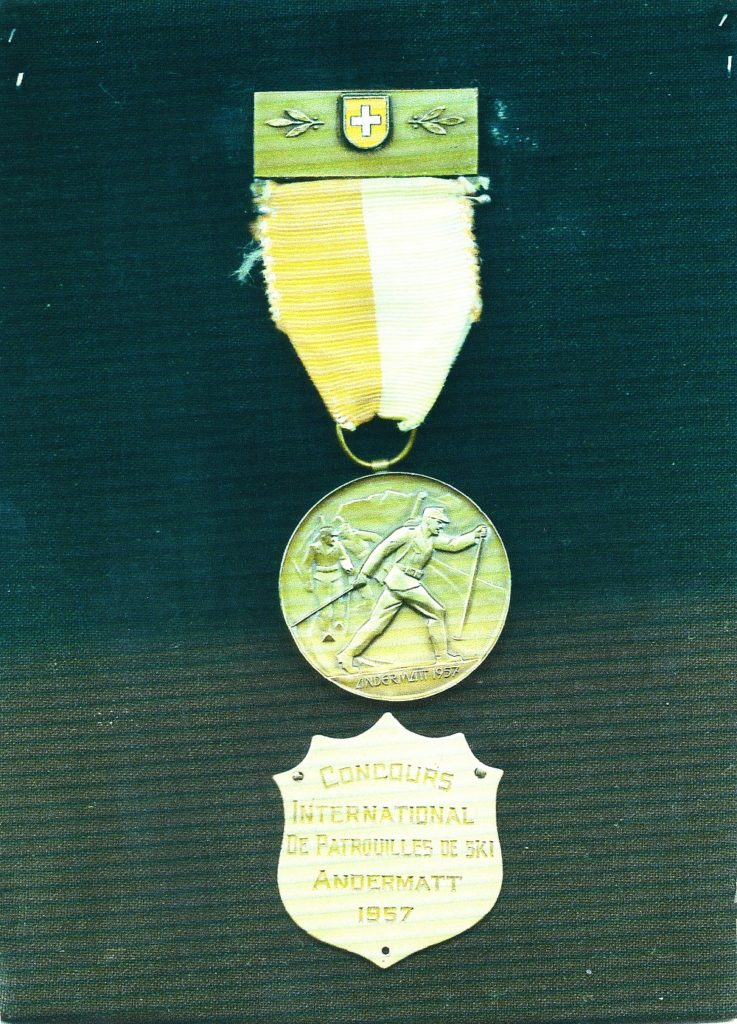
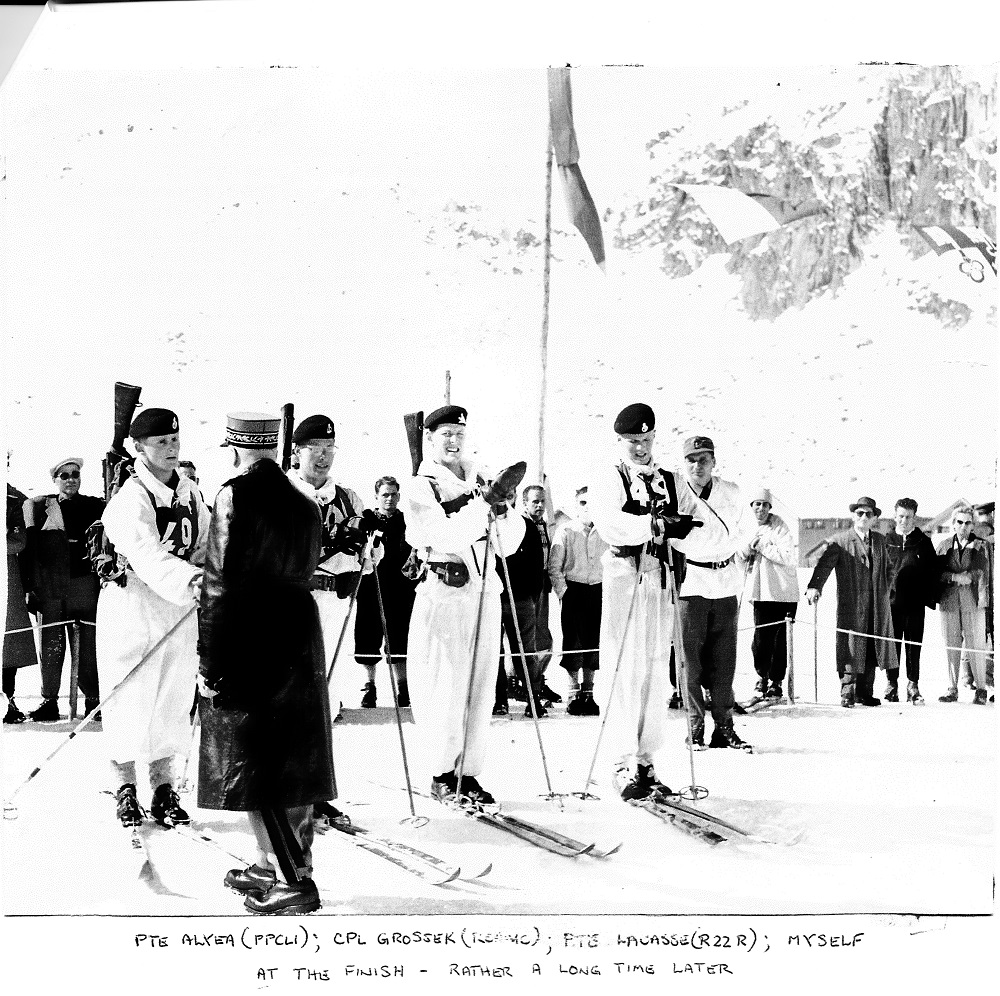
Teams started at 2 minute intervals, so Canada 1 set off about 30 minutes after the first team. The course had no big hills except for the slalom section, but consisted of mostly long up or downhills which did not present too much of a problem to the team. In spite of a broken tip which needed to be replaced partway through the race, Canada’s teams competed to the best of their abilities thanks to their superior shooting skills and overall strength and fitness which allowed them to be competitive in a field which consisted of mostly elite and Olympic skiers.
Garry retired in 1990 from a life-long career in Canada’s armed forces and is now a resident of Canmore, Alberta, where he can be seen almost daily skiing on the trails at the Canmore Nordic Centre, 85 years young in 2020.