
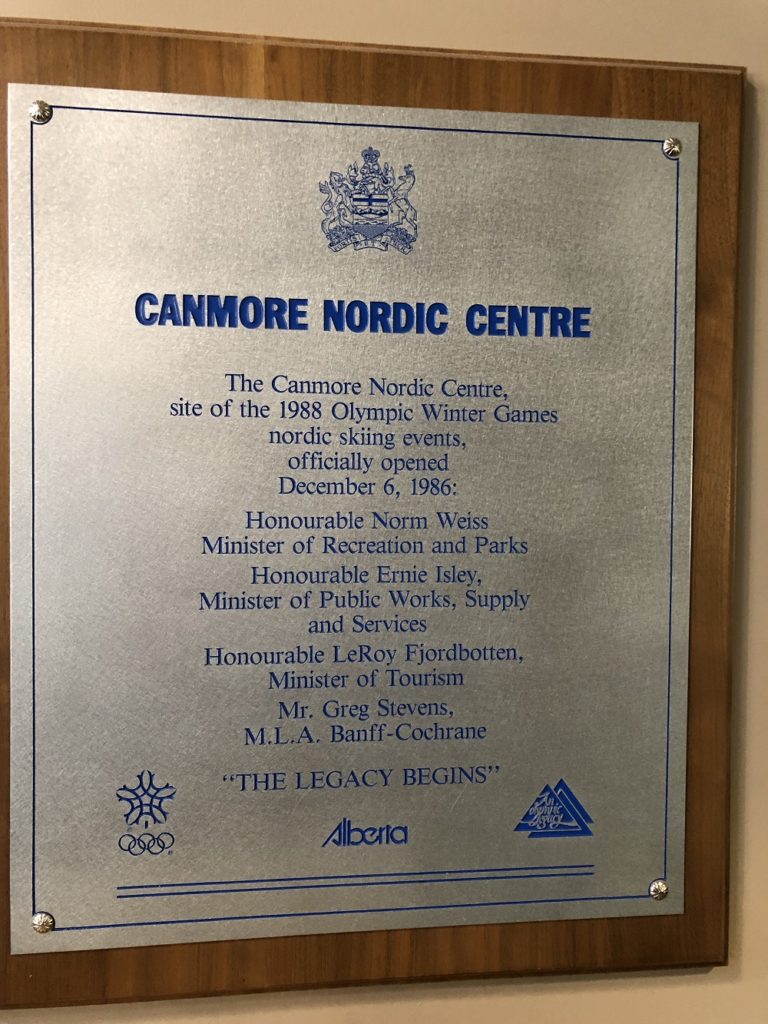
History of the Canmore Nordic Centre
Venue
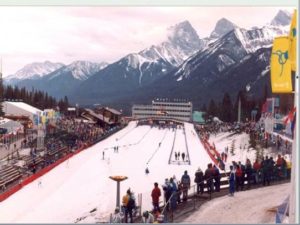
The 1988 Olympic Winter Games were awarded to Calgary on September 30th, 1981. Bragg Creek was the original venue for Nordic sports (cross country skiing, biathlon and Nordic combined) but it was quickly recognized that due to frequent chinooks and mild weather patterns at Bragg Creek, Canmore would be a more suitable location. Trail designer Don Gardner saw the potential of Canmore as a long term site for elite competition and he and others convinced the Olympic organizers to change the venue.
A team led by Gary Carson of Carson, McCulloch and Associates spent four years surveying, designing, and building a system of race trails for Olympic competition, the daylodge and the team wax rooms. Ron Henderson was the first employee of the Nordic Centre, hired in July 1986 as Operations Supervisor. By the following summer the staff had grown to approximately 60 people. As well, many dedicated volunteers were involved to ensure that everything would be completed on time for the Games in February 1988.
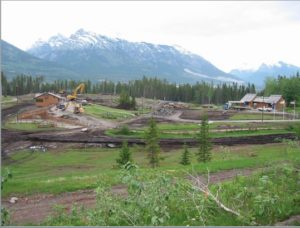
Biathlon stadium construction
Olympic Winter Games 1988
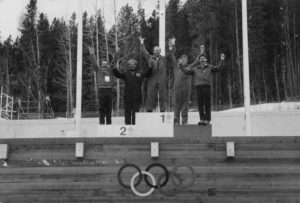
The first pre-Olympic events were held in the winter of 1986/87. These were World Cup races in cross country, biathlon and nordic combined. Volunteers from the Bow Valley, Calgary and elsewhere in Alberta and Canada had been taking officials training to ensure a high standard of race officiating.
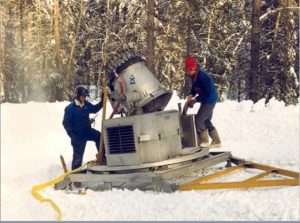
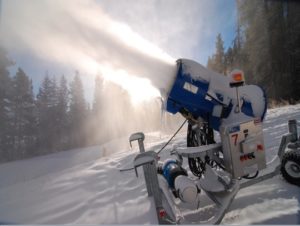
The Olympic year, 1987/88, was a poor snow year, with weeks of mild temperatures in November and December. By January, Olympic organizers faced huge challenges to have the trails ready for competition in February. At first, a helicopter was used to move man-made snow around the site, but this took too long. Luckily, overnight temperatures dropped, so more snow could be made, stockpiled and then moved by truck along the trails, where it was spread out by tractors towing manure spreaders. To increase snow-making capacity, a large Hedco snow gun was imported from New York State. A small army of volunteers with shovels and on snowmobiles assisted with the work seven days a week.
The Olympic Legacy
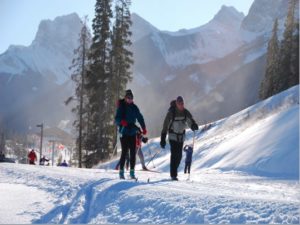
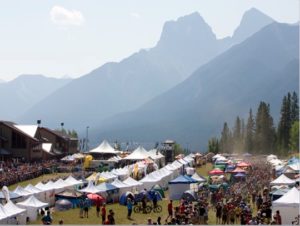
Following the highly successful Olympics from 13th to 28th February 1988, the Nordic Centre hosted several more world cups in cross country and biathlon until the early 1990s. At the same time the number of skiers using the trails gradually increased each year. Easier recreational trails were developed (the Upper, Middle and Lower Banff trails, now called Meadowview, the Banff Trail and the Bow Trail respectively). In the summer mountain biking was encouraged and the first mountain bike races at the Nordic Centre were held in July 1990 with about 50 competitors. Cross country running races were hosted, as well as other events such as music festivals, a boy scout jamboree and car rallies.
Bow Valley and Calgary skiers trained at the Nordic Centre in winter and summer. Trail Sports was opened up to sell and rent equipment, new food services were opened in the Daylodge, and the same grooming and track-setting standards established for the Olympics continued to be provided. The early Canmore Nordic Centre was the only facility of its kind in North America, with snowmaking on nordic ski trails.
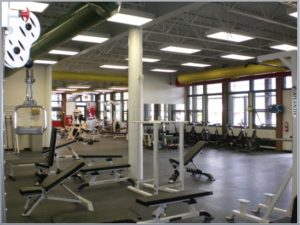
The Bill Warren Training Centre was opened in 1994 as a direct benefit of the Olympic Legacy. Elite cross country skiers and biathletes now had a permanent place from which to train, and there was also a gym, meeting rooms and office space. Weddings and other community functions are held in the building. By 2006 increased demand led to the need for more space, and a major renovation was completed which doubled the size of the building.
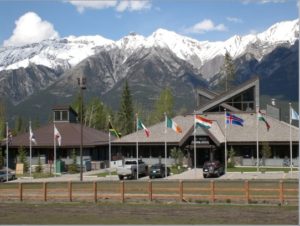
Bill Warren Training Centre
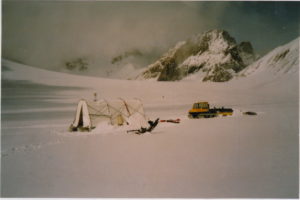
Five years earlier, in 1989, the Calgary Olympic Development Association (CODA) had started a summer ski training programme for elite skiers on the Haig Glacier. It began with a tent camp the first year, then in1990 a hut was constructed and a snowmobile was helicoptered in for grooming and track setting. Now called the Beckie Scott Training Centre, it is in continuous use throughout the summer months.
Grooming
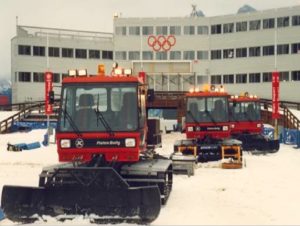
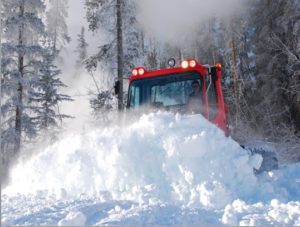
In 1988 it took 3 snowcats (Bombardiers and Pisten Bulleys) to groom the trails, and a couple of snowmobiles to set the tracks. Additional grooming was sometimes done by towing a “magic carpet” (a section of chain link fencing stapled to short 2x4s) behind a snowmobile to flatten the surface. In those early years, approximately 4 to 6 kilometres of trail could be groomed and trackset in one hour. Today, 10 to 15 kilometres can be completed in the same length of time.
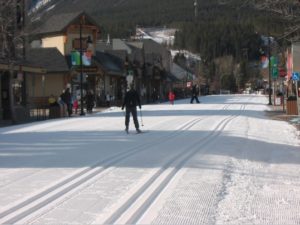
The Nordic Centre’s groomers, or snow farmers, are a dedicated team who work long hours throughout the night to ensure a high quality track for the next day’s skiers.
The Present
In 2003, the Alberta World Cup Society worked with the Nordic Centre to obtain government funding for a major upgrade to the trails and daylodge. Construction began in 2004 and the Alberta Centennial World Cup was held in December 2005. Subsequent cross country World Cups have been held in 2008, 2010 and 2012, as well as international biathlon events. The Canmore Nordic Centre is recognized as one of the top three World Cup sites in the world which has a modernized biathlon range, a large multi-room wax building and several kilometres of paved roller ski trails.
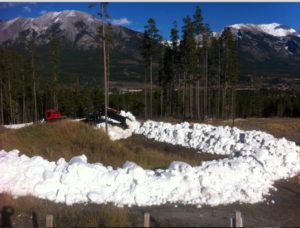
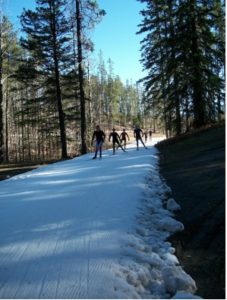
In October 2008 the first early season trail made of man-made snow was opened. It was dubbed Frozen Thunder and its length was 400 metres (all in the stadium area). By 2009 it was 900 metres long and by October 2011 it had grown to 3,000 metres. Snow is made in the previous winter and stockpiled under sawdust over the summer. Frozen Thunder has gained world-wide attention, enables Canadian athletes to train at home in the early season, and is starting to be used by teams from the U.S.A. and Europe as well.
Wildlife Management
People and wildlife share the Canmore Nordic Centre Provincial Park, so wildlife is actively managed. Berry bushes are eliminated to discourage bears from staying in the park to eat. Public awareness sessions are held to educate people about cougars as well as bears.
Reference:
Don Gardner
Michael Roycroft
Ron Henderson
Paul Ashton
Len Gottselig
Thomas Holland
Dave Rees